


What is Online Therapy or online counselling?
Online counselling or Online Therapy is an online alternative to the old-style method of face-to-face counselling. Online counselling provides support and treatment for a wide range of conditions such as Anxiety, Depression, Post Traumatic Stress Disorder, Relationship Issues (counselling) , Eating Disorders, Substance Abuse, Negative Overthinking, Panic Disorder (counselling) , Emotional Disorder Obsessive Compulsive Disorder , Social issues, Poor Coping Mechanisms, and functioning.
How does online counselling work?
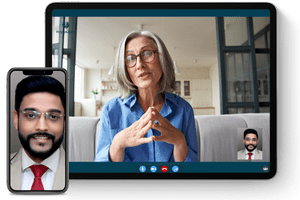
Online Counselling is a result of the improvements in technology in the healthcare platforms that help you go past the restrictions of offline or face-to-face therapy. Online therapy allows people to contact mental health experts through audio and video calls over the Internet. Online healthcare platforms such as HopeQure bring together specialty-specific mental healthcare experts and people who are looking for specialty healthcare guidance and treatments.
Is online counselling effective?
Despite the doubts, research regularly demonstrates that online treatment for a variety of mental health conditions can be quite beneficial. The following are the findings of some studies:
Online therapy was judged to be an "effective, acceptable, and practical health treatment" in a 2018 study. For major depression, panic disorder (services) , social anxiety disorder , and generalized anxiety disorder, the study indicated that online cognitive behavioral therapy was just as effective as face-to-face treatment.
According to a 2014 study, internet treatment for depression was just as efficient as face-to-face treatment. And online therapy was found to be useful in treating anxiety problems in a 2014 study. The treatment was cost-effective, and the beneficial results were maintained after a year.
Online Therapy has a few advantages over traditional face-to-face counselling:
-
Rural residents and those with transportation issues may have easier access.
-
Many online counselling websites allow clients to sign up with "nicknames," which can encourage people who are afraid to reveal their true names to seek help.
-
The majority of virtual therapy services are less expensive than in-person counselling.
-
For many people, scheduling is more convenient.
-
According to studies, internet therapy takes 7.8 times less time than face-to-face therapy, which means therapists may assist more people online than in person.
-
Clients do not have to be concerned about seeing familiar faces in the waiting area.
-
When people share private information online, this can be easier for them to reveal it.
What are the benefits of online counselling?
In recent times, going out for attending face-to-face counselling sessions may prove as a problem than support. Below are some significant benefits of online therapy services:
-
Online therapy is available even if you reside in remote or inaccessible locations and cannot travel to the clinic or hospital for a face-to-face session.
-
Online therapy is highly beneficial for those with health issues who cannot travel. You may be immobile, wheelchair-bound, have low immunity, or are healing after an injury or surgery. This is when accessing your online therapists helps.
-
Online therapy services are highly affordable in cost and plans compared to face-to-face therapy and it also cuts the costs of traveling.
-
Online counselling services are highly flexible and can be scheduled as per your calendar.
-
Online therapy is highly private for people who do not wish to be seen at the counsellor’s cabin and can take their online sessions in the privacy of their homes.
-
Online couples therapy also provides a safe and non-judgmental environment for couples to talk about their problems.
Online therapy lets you seek professional help easily rather than talking to your family or friends who may not be qualified to help with your problem. At HopeQure, you have the option of choosing from the Best Therapists in the country and can be guaranteed the best treatment and care. All your medical reports and records will be visible online in your account.
Do not hesitate to take the first step toward improving your mental health. Book your appointment with an online Therapist today.
