

Providing counselling for psychological problems through the Internet is a relatively new, unconventional yet effective trend. It eradicates the barrier of geographical location and reaches a wide spectrum of people who would otherwise not have good options.
Sessions with an Online Therapy Experts are easily accessible using a stable internet connection and a compatible smart device. Besides location, e-therapy also makes mental health services accessible to those who might lack funds as it is quite cost-effective. In addition, it gives you the freedom to choose from a wide range of experts.
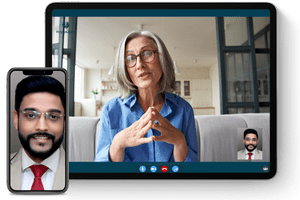
Online Therapy is available in three formats:
- Chat session
- Tele counselling
- Video counselling
However, it is important to note which of these is most effective.
Chat sessions provide neither audio nor video and are far from in-person therapy experience. That is why they are less effective.
During Tele counselling only audio exchange is there and no video exchange, which is again less close to offline counselling. Thus it is comparatively more effective than chat but less effective than video counselling.
Video counselling is the right combination of audio-visual and provides an experience closer to traditional in-person therapy. We can rightly conclude that (video counselling) is the most effective of the three. We cannot ignore the role of voice modulation, tone, pauses and other parts of speech. Unfortunately, chat sessions cannot accommodate that. While audio sessions or chat counselling include para language features it misses out on non-verbal communication or body language including expressions, gestures etc. Experts suggest that more than 70% of our communication is nonverbal and thus cannot be ignored.
HopeQure is an Online Counselling platform which provides safe and secure video counselling sessions with a wide range of experts for different mental health issues. The experts have been through a rigorous process of credential checks and are experienced. In addition to all this; appointment reminders, tracking appointments and even payment process are hassle-free.
Choose what suits you but do seek help if you need it!
